Buttery Homemade Croissants
Uitgelicht onder: Bakfavorieten
I can't express how rewarding it is to make buttery homemade croissants from scratch. The aroma that fills the kitchen is simply divine, and there's nothing quite like the sound of that first crack when you break one open. I spent a weekend experimenting with different techniques and learned that the key is to be patient. Resting the dough properly allows the layers to form beautifully, resulting in a flaky pastry that melts in your mouth. Trust me, once you master this recipe, you'll want to make them again and again!
When I first decided to tackle homemade croissants, I was intimidated by the idea of working with yeast and laminated dough. However, my determination to enjoy fresh, flaky pastries at home fueled my passion. I discovered that using high-quality butter makes all the difference — it elevates the flavor and texture of the croissants significantly. The layering technique, though time-consuming, is well worth it for the end result.
Through countless trials, I learned that letting the dough rest gives it the elasticity needed to create those signature air pockets. My best tip? Pay attention to the temperature of your kitchen, as warmth can affect how the dough rises and how the butter incorporates. This attention to detail is key to achieving the ultimate breakfast treat!
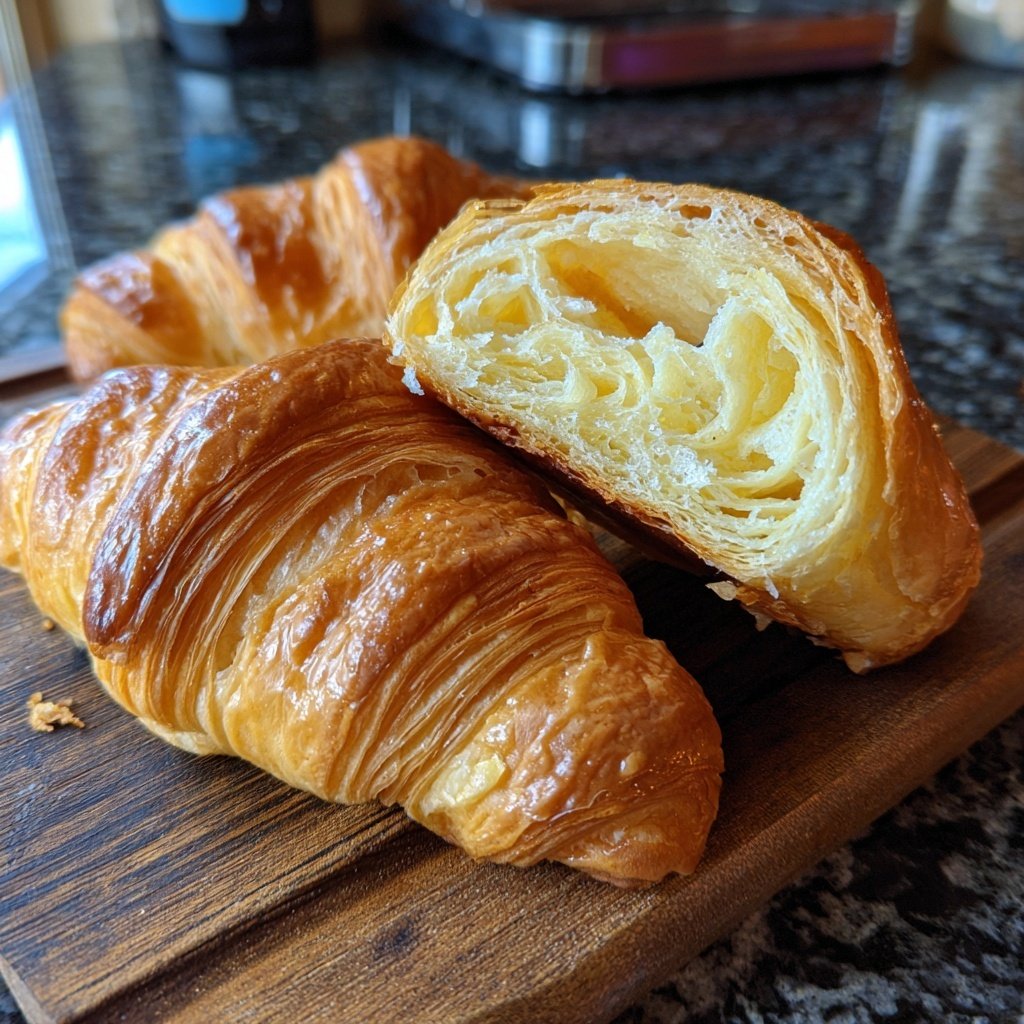
Why You'll Love These Croissants
- Flaky layers that create the perfect texture
- Rich buttery flavor that satisfies any pastry lover
- The pride of making these from scratch
Understanding the Ingredients
The key to achieving perfect croissants lies in understanding the roles of your ingredients. All-purpose flour provides the necessary structure, while the high gluten content gives the croissants their signature chewy texture. Opting for unsalted butter allows you to control the saltiness and enhance the rich flavor. Using warm milk activates the yeast, promoting a good rise, while sugar serves as food for the yeast, encouraging it to multiply and create a light, airy pastry.
Be mindful when measuring the flour; too much can lead to dense croissants, while too little may result in overly sticky dough. Use a kitchen scale for accuracy. If you find yourself in need of an alternative, bread flour can be used for extra chewiness, but be aware that it may alter the flakiness slightly.
Perfecting the Lamination Process
Lamination is where the magic happens. Ensure your butter is cold and pliable but not too soft—it should be malleable enough to roll without breaking but firm enough to maintain its shape. This step is essential for creating the flaky layers that croissants are known for. If the butter starts to warm up during the process, pop the dough back in the fridge for a short rest, typically just 15 minutes will suffice.
During the rolling and folding process, aim for even thickness. Uneven layers can cause the croissants to bake irregularly, impacting not only their appearance but also their texture. When you’re rolling out the dough, use a light dusting of flour to prevent sticking, but avoid over-flouring, as it can lead to dry croissants.
Ingrediënten
Gather all the ingredients you need for the perfect buttery croissants:
Dough Ingredients
- 500g all-purpose flour
- 10g salt
- 40g sugar
- 10g active dry yeast
- 300ml milk, warm
- 250g unsalted butter, cold
Egg Wash
- 1 egg
- 1 tablespoon milk
Make sure to have everything measured out to ease the process!
Bereidingswijze
Follow these steps to create your perfect croissants:
Prepare the Dough
In a large bowl, mix warm milk, sugar, and yeast. Let it sit for about 5 minutes until frothy. In another bowl, mix flour and salt, then combine with the yeast mixture to form a dough. Knead for 10 minutes until smooth, then let it rise for 2 hours.
Laminate the Dough
Roll the dough into a rectangle, then place the cold butter slab in the center. Fold the dough over the butter and roll out again to create layers. Repeat the folding process two more times, resting the dough in the fridge between folds.
Shape the Croissants
Roll the laminated dough into a large rectangle and cut it into triangles. Roll each triangle from the base to the tip to form a croissant shape. Place on a baking sheet and let rise for 1 hour.
Bake the Croissants
Preheat your oven to 220°C (425°F). Whisk together the egg and milk for the egg wash and brush over the croissants. Bake for 20-25 minutes until golden brown. Enjoy warm!
Serve fresh and enjoy the fruits of your labor!
Professionele Tips
- For best results, ensure your ingredients are cold, and work quickly to keep the butter from melting during the lamination process.
Storing and Freezing
Croissants are best enjoyed fresh, but if you want to make them ahead, they can be frozen after shaping. Place them on a baking sheet and freeze until solid, then transfer to a zip-top bag for up to three months. When ready to bake, simply let them rise in the refrigerator overnight, then bring them to room temperature before baking. This method ensures the layers stay intact and flaky.
If you have leftover baked croissants, store them in an airtight container at room temperature for up to two days. To revive their crispiness, reheat in a 350°F (175°C) oven for about 5-10 minutes. This quick reheating will bring back their delightful texture and warmth.
Common Issues and Troubleshooting
If your croissants don’t rise as expected, check the freshness of your yeast. Expired yeast can lead to dense pastries. Additionally, ensure your dough is being kept in a warm place during the rising stage. If your kitchen is cool, try placing the dough near a warm oven or in a turned-off oven with just the light on.
Another common issue is butter leaking during baking. This can happen if the butter becomes too warm during the lamination process or if the dough isn’t sealed tightly when rolling. To prevent this, keep working in a chilled environment and ensure that edges are properly pinched to seal the butter in during shaping.
Serving Suggestions
Freshly baked croissants are delicious on their own, but they can also serve as a fantastic base for various toppings. For a classic French breakfast, pair your croissants with a smear of jam or a slice of cheese. You could also fill them with ham and cheese for a delightful savory treat, ideal for brunch gatherings.
For an upscale touch, consider making croissant sandwiches with smoked salmon, cream cheese, and capers. They also make great vehicles for eggs and fresh greens, adding versatility to this luxurious pastry. The key is to enjoy them while they're warm for the best flavor experience!
Vragen Over Recepten
→ Can I make the dough ahead of time?
Yes, you can make the dough and refrigerate it for up to 24 hours before rolling out.
→ What can I do if my croissants don't rise?
Make sure your yeast is fresh and check that your rising environment is warm enough.
→ Can I freeze the croissants?
Absolutely! You can freeze them before or after baking. Just make sure they are well wrapped.
→ What type of butter should I use?
Use high-quality unsalted butter for the best flavor and texture.

Buttery Homemade Croissants
Gemaakt door: Isobel Fairfax
Recepttype: Bakfavorieten
Vaardigheidsniveau: Intermediate
Eindportie: 12 croissants
Wat je Nodig Hebt
Dough Ingredients
- 500g all-purpose flour
- 10g salt
- 40g sugar
- 10g active dry yeast
- 300ml milk, warm
- 250g unsalted butter, cold
Egg Wash
- 1 egg
- 1 tablespoon milk
Stappen
In a large bowl, mix warm milk, sugar, and yeast. Let it sit for about 5 minutes until frothy. In another bowl, mix flour and salt, then combine with the yeast mixture to form a dough. Knead for 10 minutes until smooth, then let it rise for 2 hours.
Roll the dough into a rectangle, then place the cold butter slab in the center. Fold the dough over the butter and roll out again to create layers. Repeat the folding process two more times, resting the dough in the fridge between folds.
Roll the laminated dough into a large rectangle and cut it into triangles. Roll each triangle from the base to the tip to form a croissant shape. Place on a baking sheet and let rise for 1 hour.
Preheat your oven to 220°C (425°F). Whisk together the egg and milk for the egg wash and brush over the croissants. Bake for 20-25 minutes until golden brown. Enjoy warm!
Extra Tips
- For best results, ensure your ingredients are cold, and work quickly to keep the butter from melting during the lamination process.
Voedingswaarde (Per Portie)
- Calories: 250 kcal
- Total Fat: 16g
- Saturated Fat: 10g
- Cholesterol: 45mg
- Sodium: 180mg
- Total Carbohydrates: 25g
- Dietary Fiber: 1g
- Sugars: 1g
- Protein: 5g